
Services
Transloading & Transfer
On most Mexico lanes the freight changes equipment at the border. Whether that costs you two hours or two days is an execution question.
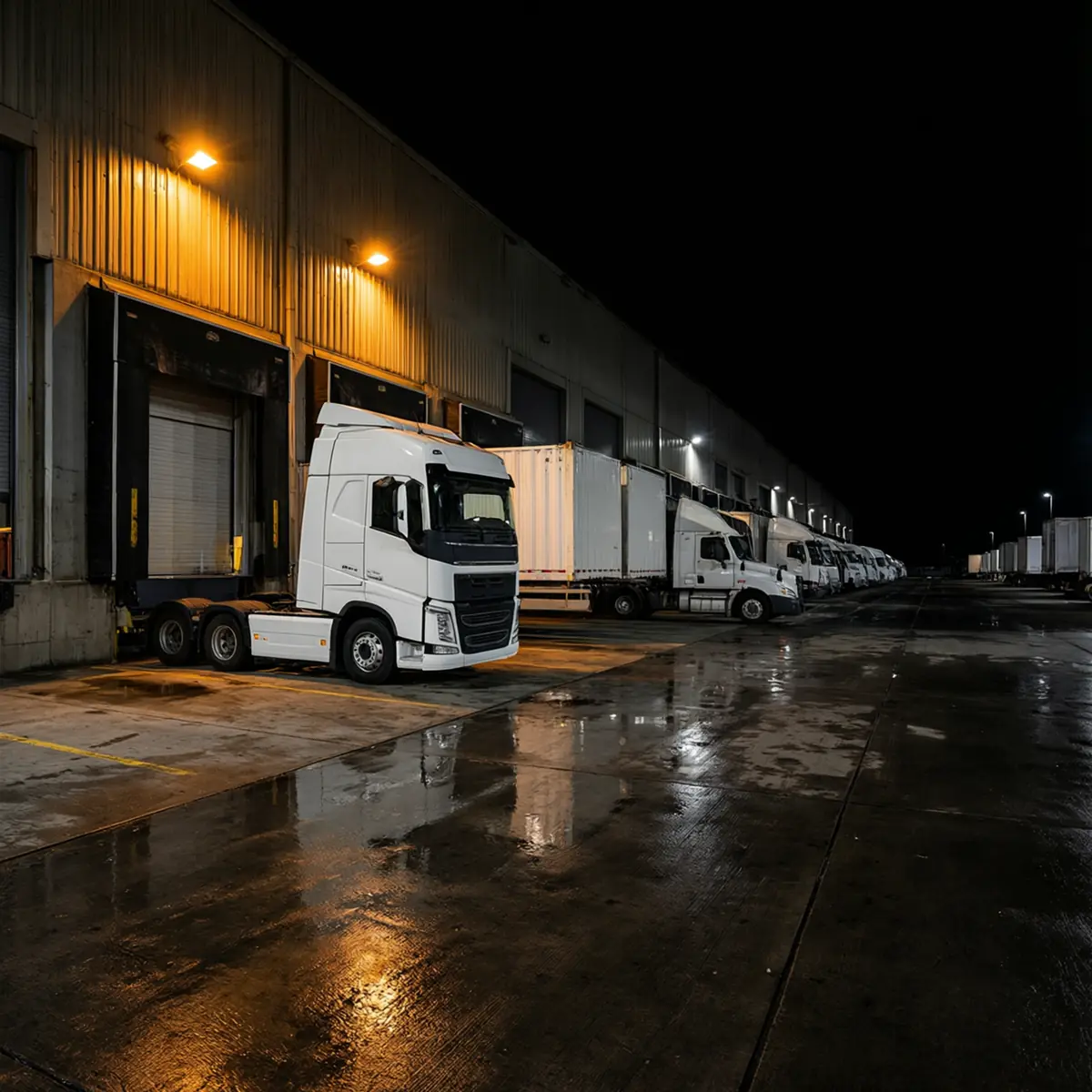
Transloading is the transfer of freight from one trailer to another — typically because Mexican and U.S. equipment, carriers and drayage do not run through. It is routine, it is unavoidable on most southbound and northbound lanes, and it is one of the most common places for a shipment to stall.
We arrange the transfer as a scheduled event with a time on it, sequenced against the customs window and the onward linehaul, rather than as something that happens whenever the yard gets to it.
What transfer covers
- 01
Trailer-to-trailer
Direct transfer between Mexican and U.S. equipment at the crossing.
- 02
Cross-dock
Dock-level handling where freight is separated, re-sorted or split to multiple onward trailers.
- 03
Re-palletisation
Rebuilding pallets to the receiver’s standard, where the origin packaging will not be accepted.
- 04
Piece verification
Count and condition recorded at the transfer point, so a discrepancy is caught at the border rather than at delivery.
What is coordinated
- Transfer facility arranged at the crossing with a scheduled window
- Sequencing against customs documentation and the onward linehaul
- Piece count and condition recorded at transfer
- Onward carrier scheduled to the transfer completion, not to a guess
- Exception handling if the count or condition does not match the paperwork
A good fit when
- Your freight sits at the border waiting for a transfer nobody scheduled
- You are discovering damage or shortage at delivery instead of at the crossing
- Receivers reject your origin pallets and you find out too late
- You need a single party accountable for both sides of the transfer
Frequently asked
Why does freight need to change trailers at the border?
Mexican and U.S. motor carriers generally operate their own equipment on their own side of the border, with drayage moving the trailer across. Transloading is how the freight continues on the other side without waiting for a through-trailer arrangement that may not exist on your lane.
Is the freight checked during transfer?
Piece count and visible condition are recorded at the transfer point. Catching a discrepancy at the border, while both parties are present, is materially better than discovering it at the receiver’s dock days later.
Ready to move?
Send us the lane. We will come back with a plan.